



In this study, we reviewed 2026 recall data from the National Highway Traffic Safety Administration (NHTSA) to better understand how recalls impacted drivers across the U.S. Instead of looking at individual recalls one by one, we focused on overall patterns including which manufacturers issued the most recalls, which recalls affected the most vehicles, and which problems were most likely to result in “Do Not Drive” warnings.
The charts below break recalls down by manufacturer, vehicle component, and timing throughout the year.
Key Takeaways
- More recalls doesn’t always mean more danger. Some manufacturers issue frequent recalls that involve manageable fixes, while others issue fewer recalls with more serious risks.
- Ford led all manufacturers in recall activity, both in total recall campaigns and vehicles potentially affected.
- Electrical system issues were the most common cause of recalls, affecting the largest number of vehicles overall.
- Service brake recalls were the most likely to trigger Do Not Drive advisories, signaling higher immediate safety risks.
- A small number of large recalls can impact millions of drivers, even when most recalls affect relatively few vehicles.
- Recall impact varies throughout the year, with major spikes occurring at different points rather than following a predictable pattern.


Maximum CompensationSmall Firm Service. Big Firm ResultsNo Fee Unless You Win
Stuck With a Lemon?
We Can Help.
Decade Overview: Top 10 Manufacturers by Recall Volume (2016-2025)
To provide broader historical context, we analyzed recall campaign data from 2016 through 2025 to identify which manufacturers issued the most recalls over the past decade.
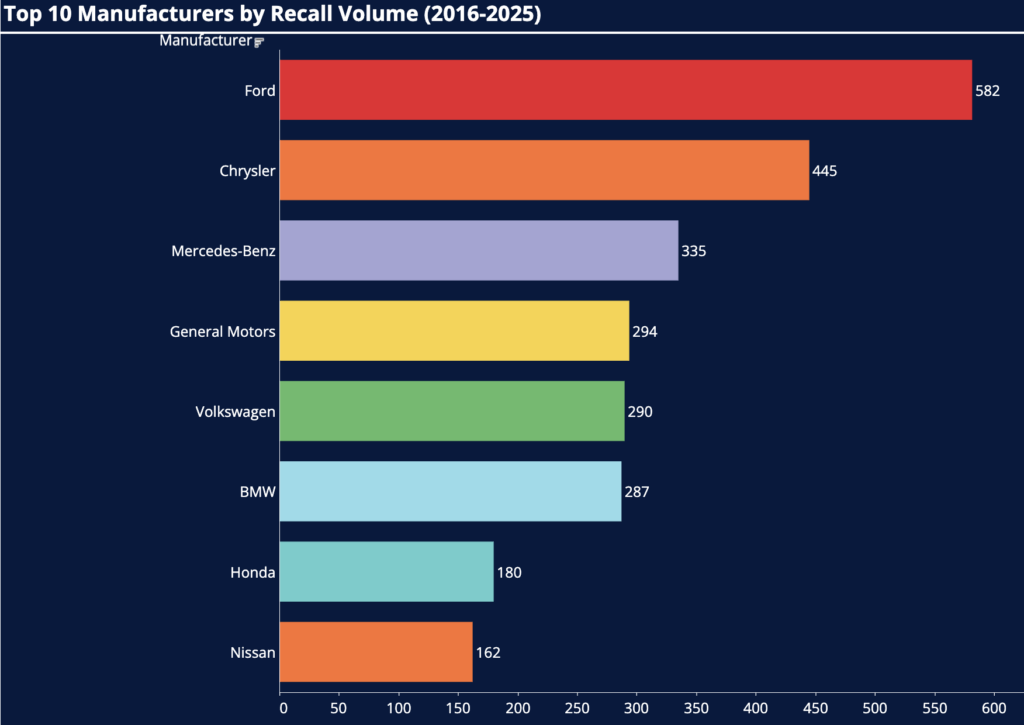
Ford leads by a wide margin, reporting 582 recall campaigns during this period significantly more than any other manufacturer. Chrysler follows with 445 recalls, while Mercedes-Benz, General Motors, Volkswagen, and BMW each reported between 287 and 335 campaigns.
Honda and Nissan round out the list, though at noticeably lower volumes compared to the top five.
This long-term view highlights sustained recall activity rather than year-to-year fluctuations. While recall frequency does not necessarily indicate that vehicles are unsafe, it does reflect how often manufacturers reported safety or compliance issues requiring corrective action.
Understanding decade-long recall trends provides important context before examining 2025 recall activity in greater detail.
Recalls in 2026 by Manufacturer
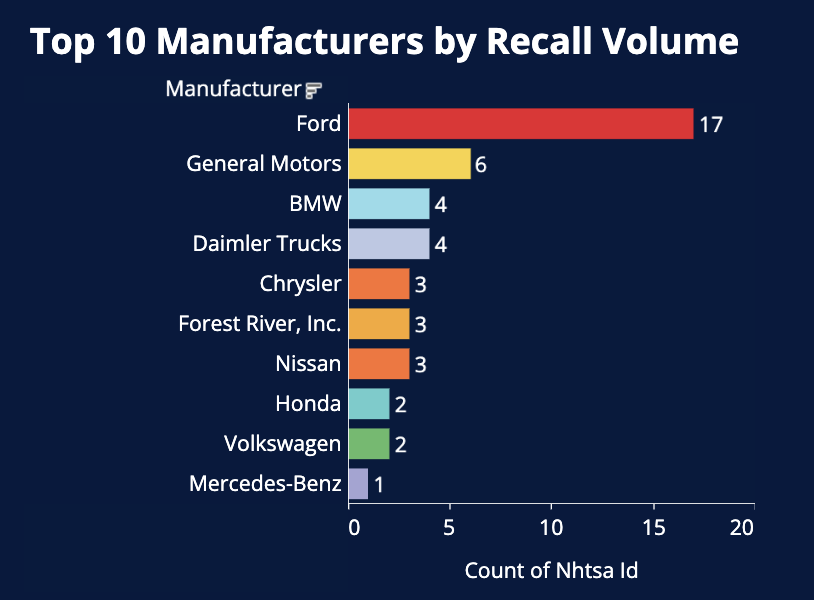
Ford stands out with the highest number of recalls by a wide margin compared to other manufacturers. While brands like General Motors, BMW, and Daimler Trucks also appear in the top rankings, their recall counts are much lower. This shows that recall activity is heavily concentrated among a few manufacturers. It’s also important to remember that more recalls don’t always mean more danger some companies may simply be quicker to identify and fix issues.
Ford Recall Trend (2016-2025)
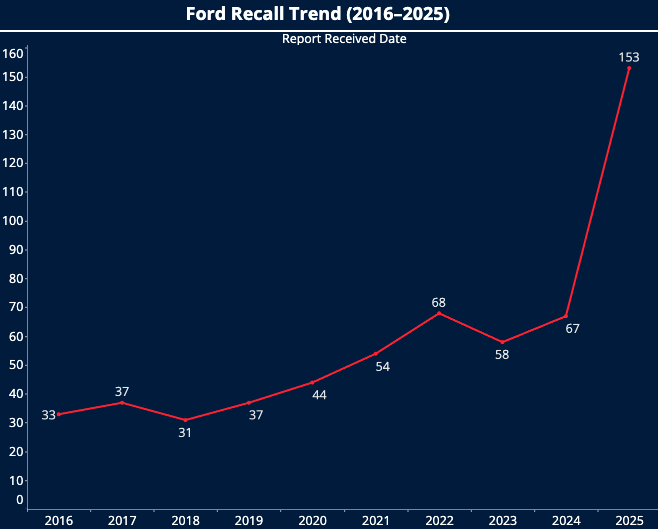
Ford’s recall activity stayed fairly steady from 2016 to 2019, averaging between 31 and 37 recalls per year. Starting in 2020, recalls began to increase, climbing through 2022.
After a small drop in 2023, recall numbers rose again in 2024 before jumping sharply in 2025. In 2025, Ford reported 153 recall campaigns more than double the previous year and the highest total of the past decade.
This sharp increase helps explain why Ford leads all manufacturers in total recalls from 2016 to 2025. While more recalls do not automatically mean vehicles are less safe, they do show an increase in reported issues that required corrective action.
Large recalls affecting popular vehicle models can quickly drive up annual totals. As 2025 shows, even a few major campaigns can significantly raise overall recall numbers.
Manufacturers With The Most Recall Campaigns
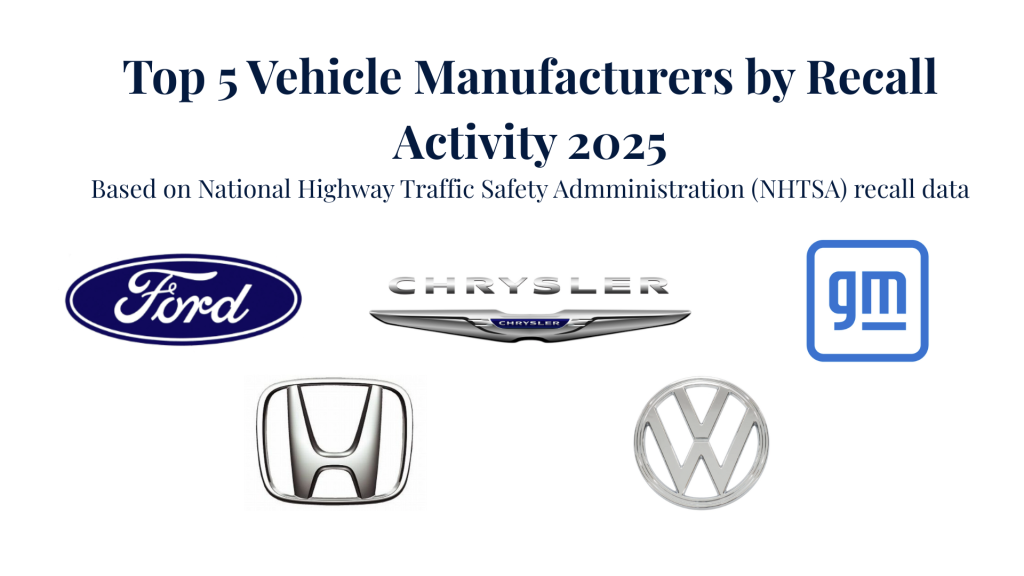
In 2025, recall activity was led by Ford, Chrysler, Honda, General Motors, and Volkswagen. These five manufacturers accounted for the highest number of recall campaigns reported to NHTSA.
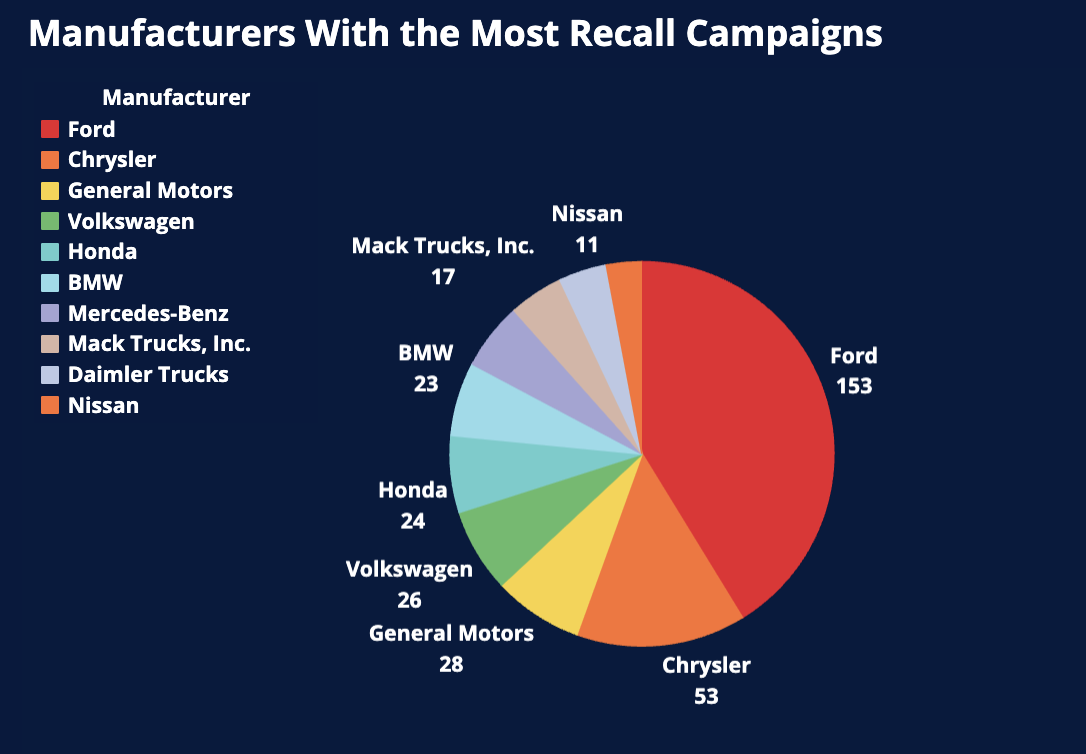
Ford stood out by a wide margin, with 153 recall campaigns, nearly three times more than any other manufacturer. Chrysler followed with 53 recalls, while General Motors, Volkswagen, and Honda each reported a smaller but still meaningful number.
Other manufacturers such as BMW, Mercedes-Benz, Nissan, and truck makers like Mack Trucks and Daimler Trucks accounted for far fewer recall campaigns overall.
It’s important to note that a higher recall count doesn’t automatically mean a brand’s vehicles are unsafe. Large manufacturers tend to issue recalls more often because they have more vehicles on the road and more models to manage. This section focuses on how often recalls were issued, not how serious each recall was.
Vehicle Recall Impact by Manufacturer
Looking only at how many recalls were issued doesn’t tell the full story. This section looks at how many vehicles were actually affected and how often recalls led to Do Not Drive warnings.
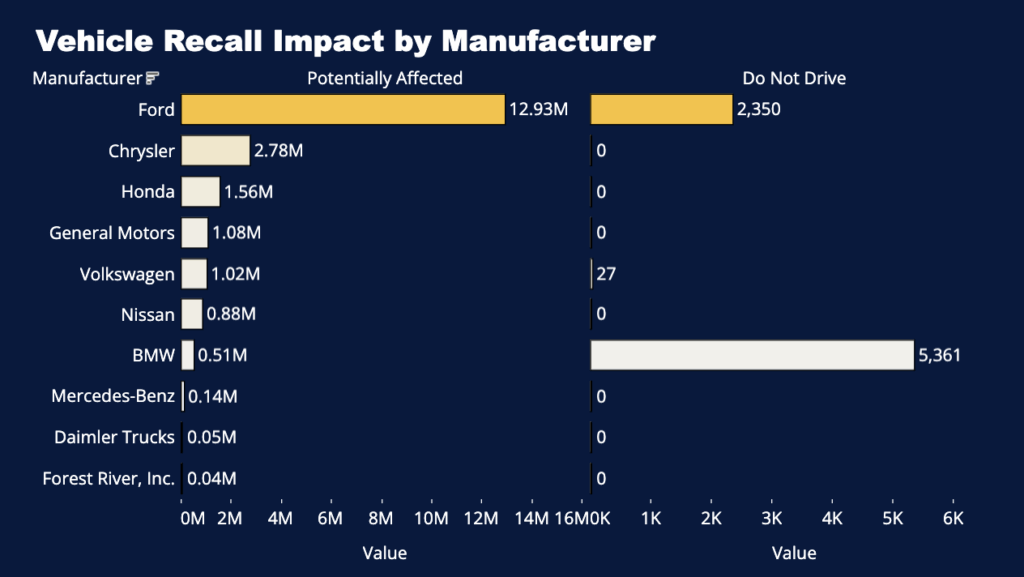
Ford again stands out, with nearly 12.9 million vehicles included in recalls during 2025. Chrysler followed with about 2.8 million vehicles, while Honda, General Motors, and Volkswagen each affected between 1 and 1.6 million vehicles.
When it comes to Do Not Drive warnings, the picture changes. BMW had the highest number of these advisories, even though it affected fewer vehicles overall. Ford also had a large number of Do Not Drive warnings, while most other manufacturers had few or none.
This shows that big recalls and dangerous recalls aren’t always the same thing. A recall can affect millions of vehicles without creating immediate danger, while a smaller recall can involve serious safety risks.
Vehicle Recall Impact by Component
Breaking recalls down by vehicle parts helps explain why some recalls are more serious than others.
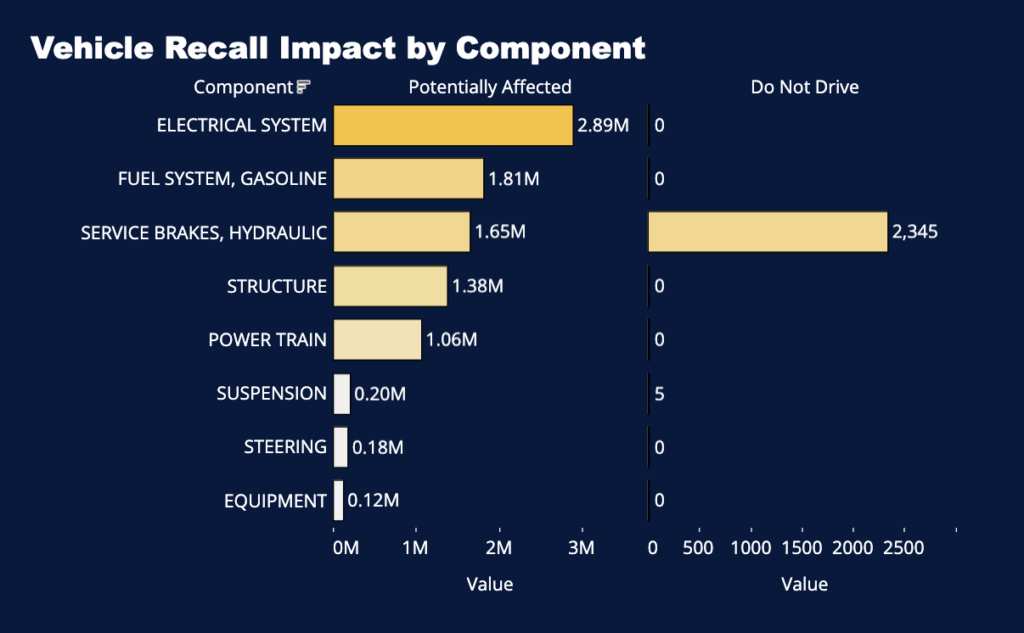
In 2025, electrical system issues affected the most vehicles overall. Problems involving fuel systems, brakes, vehicle structure, and powertrain components also affected large numbers of drivers.
However, brake-related recalls were the most likely to result in Do Not Drive warnings. This suggests that while brake issues don’t always affect the most vehicles, they are more likely to pose an immediate safety risk.
Other components such as electrical systems and fuel systems—rarely resulted in Do Not Drive warnings, even when many vehicles were affected.
Top Manufacturers Recall Breakdown
Different manufacturers tend to struggle with different types of problems.
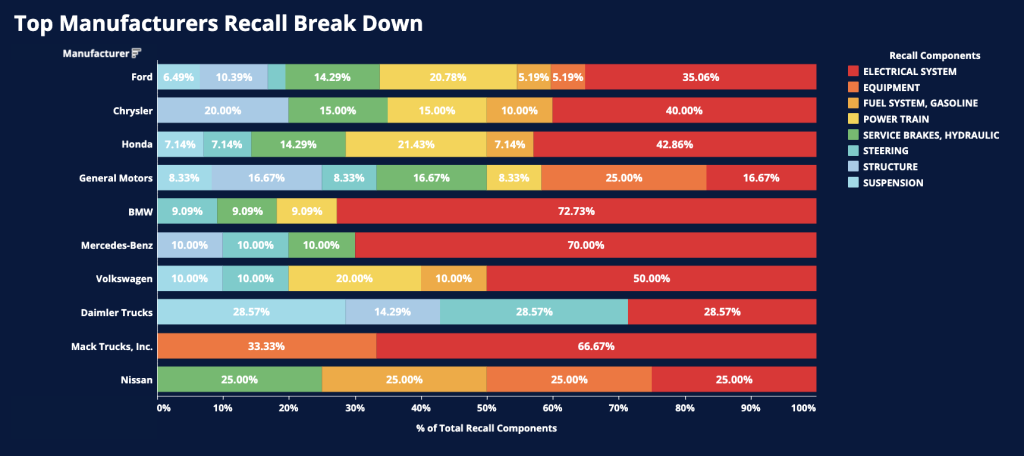
For some brands, especially Mercedes-Benz and BMW, most recalls were tied to electrical system issues. Volkswagen, Honda, and Chrysler also showed a strong concentration of electrical-related recalls.
Other manufacturers, including Ford and General Motors, had recalls spread across many systems, such as fuel systems, brakes, steering, and powertrain components. This suggests a wider range of issues rather than one recurring problem.
Truck manufacturers like Mack Trucks and Daimler Trucks showed fewer recall categories overall, which reflects their smaller production volumes and more specialized vehicles.
Recalls by Manufacturer Over Time

Most recalls in 2025 affected relatively small numbers of vehicles, which is why many points in the chart cluster toward the bottom. But a few large recalls stood out clearly.
Several major recalls happened mid-year and later in the year, including multiple Ford rearview camera recalls, each affecting hundreds of thousands to more than one million vehicles. Other large recalls involved engine failures, fuel system problems, and braking issues.
Vehicle recalls made up nearly all of the largest spikes over time. Equipment recalls were much smaller by comparison.
Overall, this shows that a handful of large recalls can have a huge impact, even when most recall activity involves smaller issues.

Methodology
This study is based primarily on vehicle recall data published by the National Highway Traffic Safety Administration (NHTSA), covering recall reports issued throughout 2026. When discussing major recalls, links to the corresponding NHTSA recall notices are included so readers can review official details if they choose. We also reviewed related news coverage and manufacturer communications to help verify recall information and provide additional context where needed. This analysis may be updated over time as new recall data becomes available or existing records are revised.